iGulu Home Brewing Bible · Edition I · MMXXVI
A Living Bible
for home brewing culture.
The canonical reference for home brewing and fermentation.
The canonical reference for home brewing and fermentation.
Fermentation is humanity's first computer. Time, temperature, and trust — the rest is just interface.
The Bible is not a manual. It is a record of how nine thousand years of brewers, vintners, kefir makers, and miso masters have negotiated with the same handful of microbes — and how that conversation continues, in your kitchen, today.
Each book is a complete reference within a single canon — read on its own, or as part of the whole. Click any book to browse its chapters.
Water, sugar, microbes, time. The shared physics and chemistry beneath every ferment — from sourdough to sake.
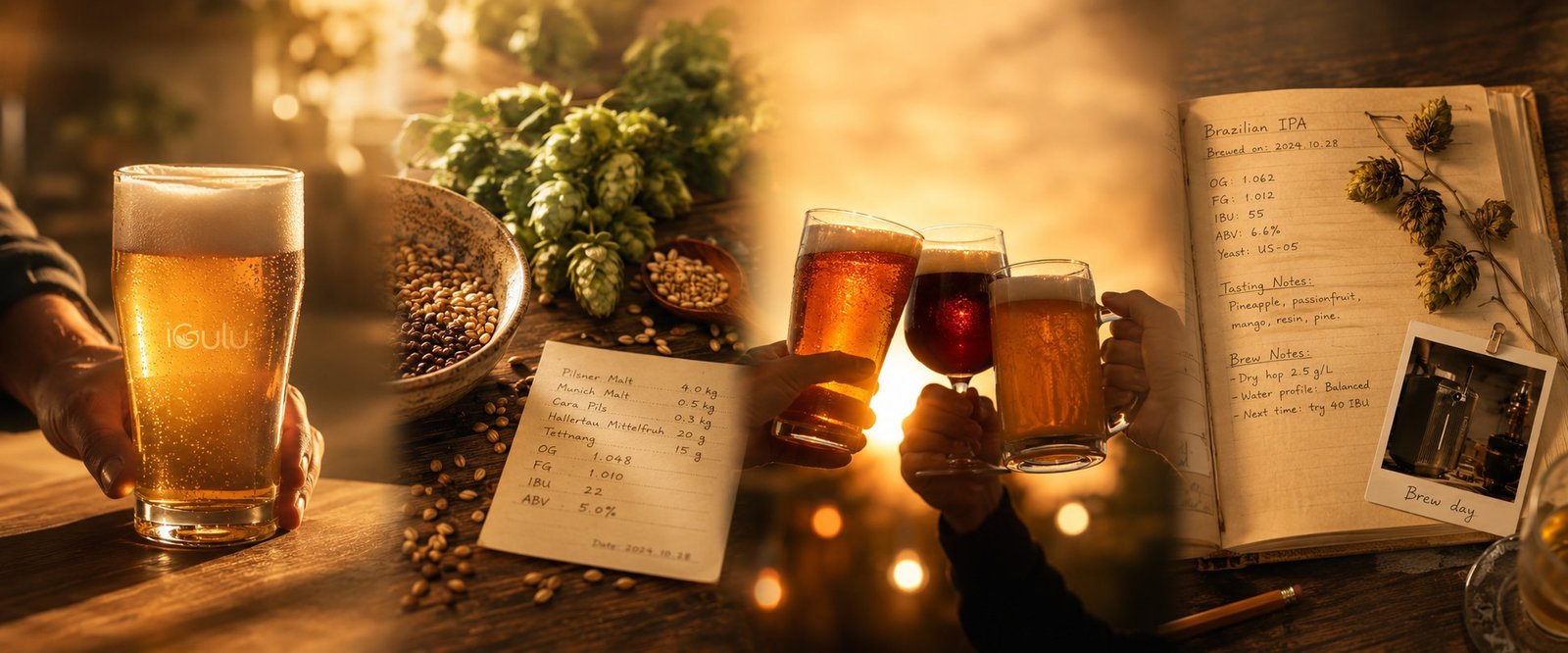
From a 5,000-year-old Sumerian hymn to the West-Coast hop bomb. Every BJCP style, every yeast, every water profile.
Fruit wines, ciders, meads, and grape wines. Sugar to alcohol, terroir to glass — the agricultural side of fermentation.
Kefir, kombucha, kvass, koji, yogurt. The probiotic ferments where microbe communities — not single strains — do the work.
Cold-brew coffee, sparkling tea, fermented sodas, cocktail-grade syrups. Where modern beverage culture meets the ferment.
Vinegar, soy sauce, miso, hot sauce, garum. Savory ferments and experimental territory — the open frontier of the Bible.
Fermentation belongs to no one. Nine thousand years of brewers, monks, farmwives, and kitchen scientists built this knowledge in the open. The Bible returns it to the open.
Every recipe is two recipes. A device-neutral version that runs on any kettle, and a one-tap version for iGulu users. Both are free. Both are first-class.
Every claim is reviewable. Sources are cited. Disputes are tracked. If a chapter is wrong, you can open a pull request — and we'll publish the fix with your name on it.
iGulu builds the press, not the words. iGulu funds the maintenance, the print run, the translations. The content is yours, under CC BY‑NC‑SA 4.0 — forever.
The Bible is large. The Foundations book is the right first read — it gives you the shared vocabulary for everything else. Twenty minutes, no setup required.
Open FoundationsThe first fifty contributors will be named in the printed Edition I. Whether you write a chapter, fix a citation, or translate a paragraph — every merged PR earns a permanent seat.
How to contribute